
The Midnight network is officially live, and the best way to experience Midnight in action is at midnight.fun.
Midnight.fun is a live gallery of games and DApps designed to show exactly how fourth generation blockchain technology works in action. Midnight enables programmable privacy, meaning that information can be kept private and only selectively disclosed under certain pre-defined conditions.
Every action on midnight.fun provides an opportunity to interact with the Midnight protocol and learn more about the unique functionality. For developers, it provides open-source templates, giving everyone a head start on building secure, private-by-design applications.
To learn more about the games, and how they illustrate Midnight functionality, read on.
Managing private state and fog of war
To support real-world use, blockchain privacy must be programmable. Midnight gives developers precise control over what data is collected, how it is used, and exactly when to reveal or shield information on the public ledger. All of these rules are enforced at the protocol level.
In traditional game design, a fog of war is a mechanic that restricts a player’s in-game vision to their immediate surroundings, forcing them to make tactical decisions based on incomplete information about their opponent.
On a public blockchain, implementing a true fog of war is technically difficult because a technically savvy player or malicious actor could simply inspect the ledger to reveal the raw data on-chain. This transparency of a public blockchain eliminates the real capacity to exercise tactical decision-making based on a limited set of information.
Kachina Kolosseum
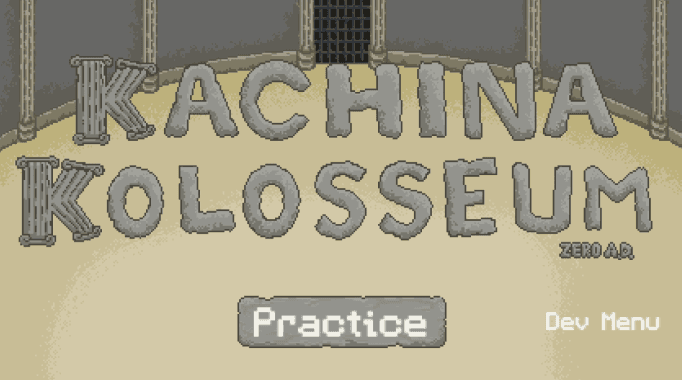
Kachina Kolosseum uses programmable privacy to create a fog of war mechanism in the game by using Midnight’s private state functionality to shield a user’s tactical choices and movements until it is required for an interaction. This demonstrates a critical Midnight capability for developers: the ability to maintain a shared, verifiable truth without exposing all the data behind that truth.
This capability provides a blueprint for developers that extends far beyond the gaming arena. It demonstrates how to maintain a shared, verifiable environment where participants can prove they are following specific rules without disclosing their sensitive private data to competitors or the public. By making privacy programmable, Midnight enables a new class of secure interactions where trust is established without compromising privacy through cryptographic proof rather than total transparency.
High-performance gaming
To make a blockchain game feel as responsive as a traditional racer, the action on the screen can’t be held hostage by block processing times. In typical blockchain gaming, on-chain often translates to clunky loading screens or delayed gameplay while waiting for block confirmations. This level of friction kills the flow of a fast-paced race.
Block Kart Legends
Block Kart Legends is a high-octane demonstration of blockchain gaming. Before hitting the track, players select kart stats (such as speed, traction, and handling) which are recorded on the blockchain to prevent any mid-race tampering.
To keep the gameplay fluid, the game uses a dual-layered approach: while a specialized on-chain node runs a simulation to calculate the final scores, the frontend simultaneously renders the corresponding simulation in real-time. This ensures that the high-speed race you see on your screen remains mathematically consistent with the results recorded on the ledger.

Additionally, the game demonstrates cross-chain functionality by reading and writing data across both Midnight and EVM-compatible networks.
This game is a ready-to-use starter kit that takes the guesswork out of building complex blockchain apps. By using standard TypeScript, developers can bypass specialized languages to build high-energy, real-time experiences where scores update instantly while remaining securely recorded to the blockchain.
Safe Solver
Safe Solver is an on-chain "press your luck" game. Players must decide whether to drill into a safe to multiply their current score or "Cash Out" to move their temporary points into permanent points on the ledger. If a user drills and triggers an alarm, the backend syncs with the blockchain to end the session immediately, resulting in a total loss of current points. This cycle demonstrates a robust loop of user decisions, backend synchronization, and verifiable state updates.
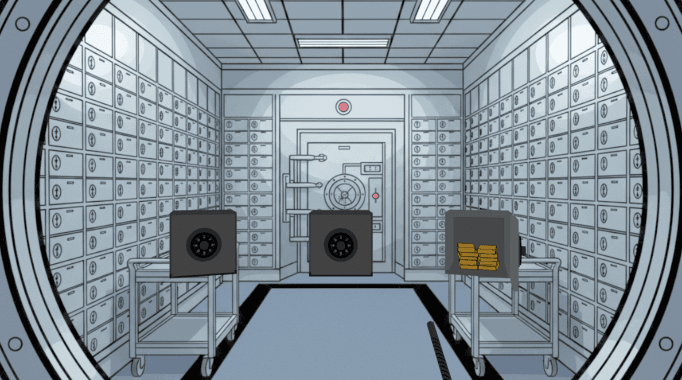
As a template, Safe Solver provides developers with a streamlined architecture where randomness calculations occur deterministically on-chain using a programmable L2 for chance-based mechanics. Developers can use this to build complex on-chain games with built-in randomness.
Get on the leaderboard
Midnight.fun is an expanding demonstration of Midnight’s capabilities. You can play, compete for the highest scores, and interact with the Midnight protocol in real-time. Whether you’re here to climb to the top of the gaming leaderboard or to dive deep into the open-source code, midnight.fun is a great way to experience Midnight.
What’s Next
This is just the beginning. The gallery will continue to expand with additional demonstrations coming in the following weeks:
- Werewolf: Experience high-stakes social deduction games, Werewolf is similar to the popular TV show The Traitors, and is a functional blueprint for secure DAO governance and confidential elections.
- Go Fish: How do you play a card game over a phone call, or a blockchain, without someone cheating? Midnight solves this hidden information problem through a process known as mental poker.
- Dust 2 Dust: Progress through dungeon battles by assembling strategic teams. Dust 2 Dust demonstrates how to handle the depth of a traditional database without exposing personal activity.
See Midnight in action now at midnight.fun