
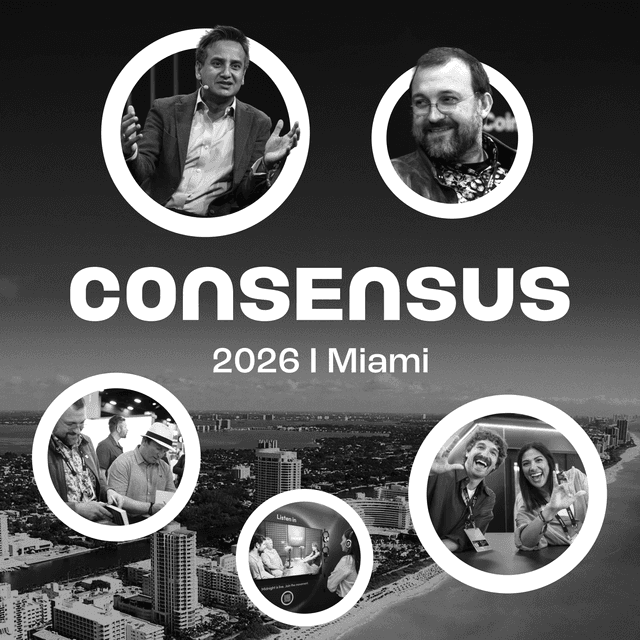
Consensus Miami was a showcase of community as well as the partners and products that are being built across the Midnight ecosystem, building towards the trillion-dollar opportunity.
One of the main themes across all of these activities is rational privacy, which is the application of reasonable human judgment, using programmable privacy tools, to determine how data is handled. Builders use their judgment and expertise to apply privacy to solve specific problems.
A series of podcasts hosted by the Midnight Foundation introduced partners and provided a space to discuss what they were building, how it fits into the Midnight ecosystem, and how it applies rational privacy.
Smoother onboarding with Midnight Passport
The cryptocurrency sector faces a significant onboarding problem due to operational friction and user anxiety over risks associated with making a mistake. During the podcast Introducing Midnight Passport Input Output CEO Charles Hoskinson points out that mainstream adoption stalls because using decentralized tools demands too much technical knowledge from the average person.
"Crypto seems to be this one product category where there's an incredibly onerous demand on the user," explains Hoskinson. "You have a ridiculous amount of friction to be able to onboard into the ecosystem."
This complex setup means people spend significant time setting up accounts, only to remain terrified of making a critical error. Hoskinson notes that even for individuals who build these systems for a living, the threat of permanent asset loss remains a constant worry. "Even after you've done all of that it's really easy to make a mistake. And when you make a mistake you lose all your money."
To address this issue, Midnight Passport is designed to provide an industry-wide reset. The goal is to build an environment that protects people from natural human error, which could establish a safer method for interacting with all blockchain networks. Hoskinson said: “What we want to do at Midnight is reset and build the entire experience of how people onboard, not just for Midnight, but the industry as a whole.”
Midnight Passport is designed to rely on the same user experience patterns found in everyday smartphone technology. Learn more in the full podcast.
Shielding decentralized finance with Nightmode
Financial activity on public ledgers introduces structural vulnerabilities for day-to-day business operations. Because most blockchains function essentially as public surveillance tools, every trade, position, and corporate strategy is visible to anyone forever.
In the podcast Nightmode - What Privacy Enhancing DeFi Unlocks w/ Houdini Swap, Midnight Foundation President Fahmi Syed and Houdini Swap Chief Revenue Officer Aaron explained that total transparency erodes a trader's alpha, allowing competitors to easily front-run or copy their moves.
Houdini Swap approaches this issue not from a radical "privacy-at-all-costs" standpoint, but through rational privacy. The application is designed to act as a simple choice for the user, rather than forcing a rigid ideology.
"Our approach is to just let the user decide." Aaron explains. "That's the stance that we take: that idea of privacy optionality."
To open up DeFi while being regulatory compliant, Houdini Swap focuses heavily on balancing privacy, compliance, and execution. Fahmi noted that this deliberate engineering choice mirrors safety patterns found in physical design. For example, vehicles with the highest safety ratings sometimes feature a boxier, less streamlined look, but the trade-off in favor of structural protection and peace of mind is well worth it for users.
To learn more about the future of privacy-enhancing DeFi with Midnight, watch the full podcast.
Smart compliance for institutional asset tokenization
Institutional adoption of real-world assets (RWAs) requires shifting away from the fully transparent nature of early public blockchains. During the panel discussion City Week 2026: From Tokenization to Confidential Finance, Midnight Foundation President Fahmi Syed explained that financial institutions inherently rely on confidentiality to protect market strategies.
In the podcast discussion with Midnight Foundation Chief Operations Officer Jenna Peterson, Smart Compliance - The Unlock for Institutional Adoption w/ Zoniqx, Zoniqx Co-Founder and Chief Business Officer Sanjeev Birari pointed out that tokenization cannot treat regulated assets like meme coins or NFTs; it is fundamentally a process of securitization that requires structural identity checkpoints.
Birari recalled the historical hurdles of building in the space, noting that in 2020, Silicon Valley Bank rejected his company’s application simply for listing "blockchain as a service," despite having no involvement in speculative crypto. Over the last two years, however, a massive shift occurred as regulators transitioned from strict blockers to market enablers.
Yet, the traditional industry's response to regulatory fear has often been to build isolated, private blockchains. In the City Week fireside chat, Syed highlighted the fatal flaw in building these closed environments.
"The trouble with building private blockchains is they become siloed," Syed points out. "Who of your clients or your competitors' clients are going to hand over their information to your private silo solution?"
To bridge this gap, Zoniqx developed an asset-agnostic operating system. The software is built to embed regulatory conditions directly at the token level across more than 20 jurisdictions.
Building the agentic economy in Midnight City
The agentic revolution is changing how people interact with digital systems, moving from basic text commands toward highly personalized software assistants. During the podcast Midnight City - The AI Civilization Where Privacy Is Engrained, the discussion highlighted that current centralized AI providers log every prompt and memory, creating a massive privacy risk. To realize the full utility of these assistants safely, the underlying network must protect user data by design.
This requirement for privacy in future agentic systems is one of the reasons Midnight City was built as a live simulation framework. Agentics interacting within Midnight City can operate continuous activity and test the network under different conditions with ongoing agentic activity.
In this environment, AI agents with competing objectives and goals can work, converse, and manage resources while eventually using independent wallets.
"We really want to have the community help to build the game, decide where we go next, what we build next. It is a community-first game,” said Joshua Batson, Chief Operating Officer at SOVO. “What excites me the most is the unpredictability of this. We're building on a new chain that's private, has all these great use cases. The agents are unscripted. They're evolving in their own ways."
Midnight City has had a major upgrade from Version 1 to Version 2, which is transforming the simulation from an observational experience into an interactive platform.
With many more features planned for future updates, users can track development via the ecosystem blog and register a custom agent at midnight.city.Watch the podcast to learn what’s coming next: